Construction and manufacturing companies have traditionally grown through referrals, distributors, trade shows, and long-term relationships. Marketing often focuses on listing capabilities instead of addressing specific customer needs. That approach worked in the past, but buyer behavior has changed.
Today, engineers, procurement managers, project managers, plant heads, and business owners research suppliers online long before they speak with sales representatives. They compare specifications, download technical documents, read case studies, and evaluate credibility through digital channels. Because of this shift, personalization in digital marketing has become a powerful growth strategy for construction and manufacturing companies.
Personalization enables companies to deliver relevant, role-specific, and industry-focused experiences, rather than generic messaging. When businesses apply personalization correctly, they build trust faster, shorten sales cycles, and attract better-qualified leads.
This article explains what personalization in digital marketing means for construction and manufacturing companies, why it matters, how it works, and how to implement it effectively.
What Is Personalization in Digital Marketing?
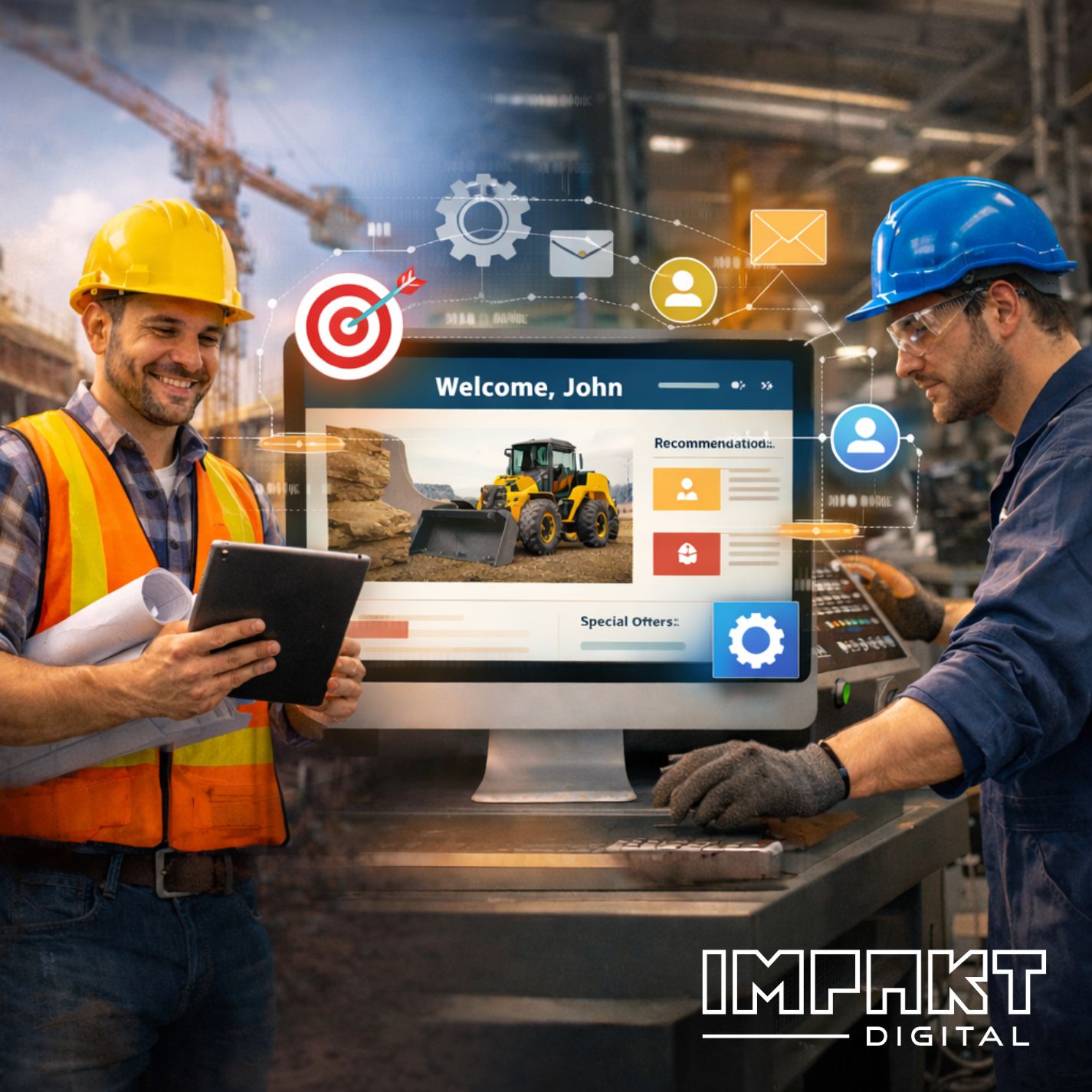
Personalization in digital marketing means tailoring content, messaging, website experiences, and campaigns based on a user’s role, behavior, industry, location, and intent.
For construction and manufacturing companies, personalization focuses on delivering the right technical and business information to the right decision-maker at the right time. Instead of showing the same brochure-style content to everyone, companies guide buyers toward information that matches their needs and stage in the buying process.
Common personalization examples include showing detailed specifications and drawings to engineers, displaying pricing and lead-time information to procurement teams, highlighting safety and compliance certifications for institutional buyers, and serving industry-specific case studies based on visitor behavior.
The objective is straightforward: make complex buying decisions easier by staying relevant.
Why Personalization Matters for Construction and Manufacturing Companies
Construction and manufacturing sales involve high-value contracts, long timelines, and multiple stakeholders. Personalization supports these realities better than generic marketing ever could.
Personalization builds trust during high-stakes decisions. Buyers need confidence before committing to large projects. When content clearly reflects a buyer’s industry, application, or project type, it positions the company as a knowledgeable and reliable partner rather than just another supplier.
Personalization also supports long and complex sales cycles. Buyers move through research, design, bidding, approval, and execution phases. Personalized content ensures they receive useful, timely information at each stage without feeling overwhelmed.
Most projects involve several decision-makers. Engineers care about specifications and performance. Procurement teams focus on pricing, lead times, and reliability. Leadership looks at risk, experience, and long-term value. Personalization allows companies to address each role directly without confusing or diluting the message.
Personalization also improves lead quality. Instead of attracting large volumes of unqualified traffic, companies attract visitors with real intent and genuine project needs.
How Personalization Works in Construction and Manufacturing Marketing
Personalization in industrial marketing relies more on intent and context than on demographics.
Collecting Relevant B2B Data
Companies gather valuable insight from website behavior such as pages visited, documents downloaded, time spent on technical pages, and repeat visits. Industry pages viewed, location data, email engagement, RFQs, and CRM records also provide strong intent signals.
Even anonymous visitors reveal a lot through how they interact with a website.
Segmenting by Role, Industry, and Intent
After collecting data, companies segment users based on meaningful criteria. Common segments include engineers versus procurement teams, commercial versus industrial buyers, new construction versus retrofit projects, and early research visitors versus ready-to-bid prospects.
Clear segmentation prevents generic messaging and improves relevance across all channels.
Delivering Personalized Experiences
Once segments are defined, companies deliver personalized experiences across websites, email campaigns, paid ads, and content hubs. Each visitor sees information that aligns with their needs, priorities, and stage in the buying journey.
Types of Personalization Used by Construction and Manufacturing Companies
Personalization in industrial marketing remains practical, technical, and information-driven.
Website Personalization for Industrial Buyers
Website personalization helps visitors find what they need faster. Companies can show engineering drawings and datasheets to technical users, highlight certifications and compliance documents to institutional buyers, display completed projects by industry or region, and present service availability based on location.
For example, a fabrication company may show clean-room compliant systems to healthcare visitors while highlighting heavy-duty steel solutions to industrial manufacturers.
Content Personalization by Industry
Construction and manufacturing companies often serve multiple industries. Content personalization helps manage this complexity. Companies create industry-specific landing pages, organize case studies by vertical, publish application-focused blogs, and develop whitepapers that address regulatory or compliance challenges.
This approach helps buyers immediately see how a solution fits their environment.
Email Personalization for Long Sales Cycles
Email personalization supports long-term relationship building. Companies send technical documents after downloads, share relevant case studies based on industry interest, trigger follow-ups when users revisit product pages, and send maintenance or upgrade reminders to existing clients.
This keeps communication helpful and relevant without feeling intrusive.
Ad Personalization for High-Intent Prospects
Personalized ads target users who visit specific product categories, download technical documents, or spend time on application or industry pages. This approach ensures marketing budgets focus on serious prospects rather than broad, low-intent audiences.
Real-World Examples of Personalization in Construction and Manufacturing
A modular construction company may show healthcare project case studies to hospital planners while presenting industrial facility projects to manufacturing buyers.
A construction services firm may highlight local certifications, safety standards, and completed projects based on a visitor’s region.
A visitor who downloads a fire safety compliance guide may later receive emails related to inspections, system upgrades, or maintenance services.
A manufacturing website may recommend compatible accessories, spare parts, or system upgrades based on previously viewed equipment.
Key Benefits of Personalization for Construction and Manufacturing Brands
Personalization attracts higher-quality leads by filtering out low-intent visitors and focusing on serious buyers.
Sales and marketing teams align more effectively because sales receives leads with clear behavioral context and interests.
Companies improve marketing ROI by directing budgets toward relevant audiences instead of broad awareness campaigns.
Personalized technical content strengthens brand authority and positions companies as experts rather than commodity suppliers.
Personalization vs Customization in Industrial Marketing
Personalization and customization serve different purposes.
Personalization automatically adapts content based on data and behavior, and the company controls it.
Customization allows users to manually select options, filters, or configurations. Product configurators commonly use this approach.
Construction and manufacturing companies often combine both methods to create better buyer experiences.
Challenges of Personalization in Construction and Manufacturing
Multiple stakeholders make messaging more complex because each role values different information.
Many buyers research anonymously, which limits early-stage data availability.
Disconnected systems often separate CRM, website analytics, and email platforms.
Companies must also use data responsibly and remain transparent about how they collect and use information.
Best Practices for Personalization in Industrial Digital Marketing
Companies should focus on intent metrics such as downloads, repeat visits, and engagement depth rather than vanity traffic numbers.
Industry-based personalization usually delivers the fastest and most reliable results.
Clear, practical messaging works better than overly promotional language.
Personalization should support sales teams by educating and qualifying leads, not replacing human interaction.
Continuous testing improves results. Companies should test different case studies, CTAs, and layouts across segments.
Tools That Enable Personalization in Construction and Manufacturing
Common tools include CRM systems, marketing automation platforms, website personalization tools, customer data platforms, analytics software, and heatmapping tools. Strong integration across systems ensures personalization works effectively.
The Role of AI in Personalization for Industrial Companies
AI enables predictive lead scoring, real-time content recommendations, automated follow-ups, and smarter segmentation based on behavior patterns. These capabilities allow companies to scale personalization without increasing manual effort.
The Future of Personalization in Construction and Manufacturing
Privacy-first personalization will continue to grow as companies rely more on first-party data.
AI-driven intent modeling will improve accuracy and relevance.
Personalized client and partner portals will become more common.
Omnichannel personalization will unify experiences across websites, email, and paid media.
Companies that adapt early will gain a lasting competitive advantage.
Final Thoughts
Personalization in digital marketing is no longer optional for construction and manufacturing companies. Buyers expect relevant, role-specific information that helps them evaluate solutions, reduce risk, and make confident decisions. When companies implement personalization effectively, they build trust, shorten sales cycles, and consistently generate better-qualified leads.
From our experience at Impakt Digital, we know that personalization only works when it is rooted in real buyer intent and a deep understanding of industrial decision-making. Construction and manufacturing businesses face unique challenges, including long sales cycles, multiple stakeholders, technical buying criteria, and high-value contracts. Generic digital marketing simply does not work in this environment.
That’s why we focus on intent-driven personalization built on SEO, content strategy, conversion optimization, and data-led insights. We help construction and manufacturing brands attract the right traffic, engage the right decision-makers, and turn digital interest into a predictable pipeline of qualified opportunities.
Personalization is not about flashy tactics. It is about relevance, clarity, and trust. When implemented the right way, personalization transforms digital marketing from a visibility tool into a sustainable growth engine. At Impakt Digital, that is exactly what we help our clients achieve.